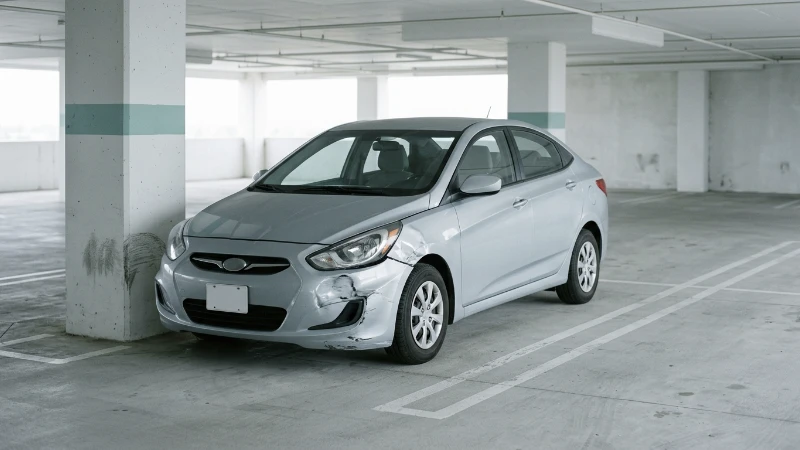
Collision insurance pays to repair your own car after it hits another car or an object, whoever caused the crash. You pay your deductible first, then insurance pays the rest, up to the car’s market value. California doesn’t require it, but a lender or leasing company usually does.
What collision pays for
The California Department of Insurance describes collision as coverage for “damage to your car caused by physical contact with another vehicle or an object” (CDI auto insurance guide (opens in a new tab)). That includes:
- a crash with another car, whether or not you caused it
- hitting a pole, a wall, a curb or a parking garage pillar
- rolling the car over
If the other driver caused the crash and has insurance, their property damage liability should pay for your car. Collision lets you get repairs started without waiting, and your insurer can try to recover the cost from them.
What collision doesn’t pay for
| What happens | Which coverage pays |
|---|---|
| Your car is damaged in a crash | Collision |
| Your car is stolen, vandalized, or hit by a falling tree, fire or flood | Comprehensive |
| You damage someone else’s car | Property damage liability |
| You or your passengers are hurt | Medical payments, health insurance or uninsured motorist |
| Your engine fails or parts wear out | Neither: that’s maintenance |
Collision and comprehensive are often sold together and called “full coverage”. That name isn’t a policy term. Each part has its own deductible, and neither pays for everything.
How much collision pays
Two numbers limit what you get:
- Your deductible. You pay this first on every collision claim.
- Your car’s market value. Collision and comprehensive pay based on what your car is worth, not what you paid or what you owe (CDI auto insurance guide (opens in a new tab)).
Example: you scrape a pillar in a parking garage and the repair costs $1,800. These amounts are illustrations.
- $500 deductible: you pay $500, insurance pays $1,300.
- $1,000 deductible: you pay $1,000, insurance pays $800.
- $2,000 deductible: you pay all $1,800, insurance pays nothing.
With a $2,000 deductible, a repair under $2,000 is yours to pay in full. Deductibles explains how to choose one.
If repairs would cost more than the car is worth, the insurer usually declares it a total loss and pays its market value, minus your deductible. If you still owe more than that on a loan, the difference is yours unless you have gap coverage. See what happens when a financed car is totaled.
Do you need collision?
You choose collision. California’s required coverage is liability, so the decision is about your own car and your own money.
Collision usually matters most when:
- you have a loan or lease. The lender almost always requires it. If you don’t carry it, the lender may buy coverage and charge you for it. CDI notes that buying your own usually costs less (CDI auto insurance guide (opens in a new tab)).
- you couldn’t replace the car from savings. If losing it would leave you without a way to get to work, collision protects that.
Some people weigh dropping collision when:
- the car is worth little. If the car is worth, for example, $3,000 and your deductible is $1,000, the most collision could ever pay is $2,000.
- you could absorb the loss. Compare a year of collision cost with what the car is worth, minus your deductible.
Either way, it’s your decision. Weigh what a crash would leave you paying with and without it.
Collision and uninsured drivers
If an uninsured driver hits you, collision still pays for your car, minus your deductible. Some insurers offer a collision deductible waiver, which means you pay no deductible when an uninsured driver is at fault. Its conditions vary by insurer. California also has uninsured motorist property damage coverage, with a $3,500 limit. Uninsured motorist coverage covers both.
What to do next
Look up your collision deductible on your declarations page, and check roughly what your car is worth today. Those two numbers tell you the most collision would pay, and what you’d pay first. Then compare estimates at your current deductible and one step higher.