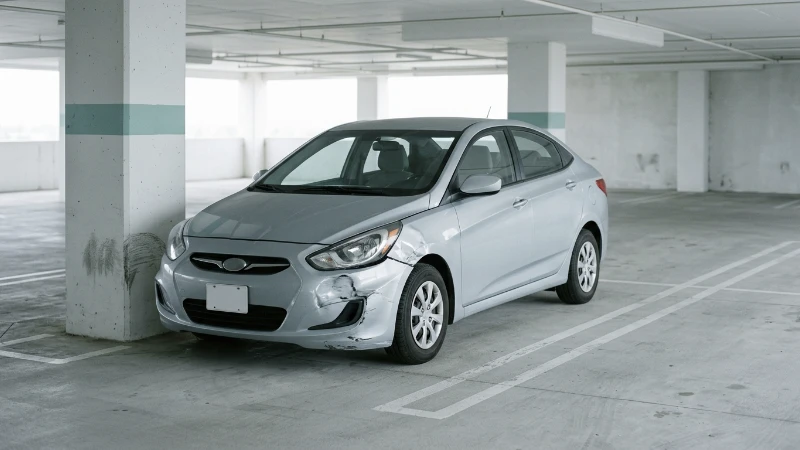
Uninsured motorist coverage pays for your injuries, and in a limited way your car, when a driver with no insurance causes the crash. In California it has two parts: bodily injury, which pays your medical bills, and property damage, which pays up to $3,500 for your car. Insurers must offer it, and you can only turn it down in writing.
The two parts
- Hit by an uninsured driver (uninsured motorist bodily injury): your medical bills and those of people in your car.
- An uninsured driver damages your car (uninsured motorist property damage): your car’s repairs, up to $3,500.
The California Department of Insurance sets out both in its auto insurance guide (opens in a new tab). The rules are in Insurance Code §11580.2 (opens in a new tab).
Uninsured motorist bodily injury
This part pays for injuries to you and your passengers when an uninsured driver is at fault. It can cover medical bills and lost wages.
- Limits. It has per-person and per-crash limits, written like liability limits (for example, 30/60). CDI says the limits are the same as your liability limits.
- It must be offered. Your insurer has to include it. If you don’t want it, you sign a form called a waiver (CDI auto insurance guide (opens in a new tab)).
- Who it covers. It applies to you and the people in your car. Check your policy for who else counts, such as family members.
When the other driver has too little insurance
CDI’s guide also describes underinsured motorist coverage: it pays toward your injuries when the at-fault driver has insurance, but not enough. Check your declarations page for how your policy lists it.
Your health insurance
Your health insurance may also pay your medical bills, but it doesn’t pay lost wages, and it has its own deductible and copays.
Uninsured motorist property damage
This part pays to repair your car when an uninsured driver damages it. In California:
- The limit is $3,500. Check your policy for any deductible.
- It only pays if the uninsured driver is identified. A hit-and-run driver who’s never found doesn’t count.
- You may not need it if you have collision, which pays for your car whoever is at fault, minus your deductible (CDI auto insurance guide (opens in a new tab)).
Some insurers offer a collision deductible waiver instead: when an uninsured driver hits your car, you pay no deductible on your collision claim. Its conditions vary by insurer.
What it means in a crash
Example: a driver with no insurance runs into you. Your medical bills and lost wages come to $60,000, and your car needs $9,000 of repairs. These amounts are illustrations, not a prediction of any claim.
| Your example coverage | Your injuries | Your car |
|---|---|---|
| No uninsured motorist, no collision | You pay $60,000 | You pay $9,000 |
| Uninsured motorist bodily injury at 30/60, property damage at $3,500 | Pays $30,000, you pay $30,000 | Pays up to $3,500, you pay the rest |
| Uninsured motorist bodily injury at 100/300, collision with a $500 deductible | Pays $60,000 | You pay $500, collision pays $8,500 |
You could try to collect from the other driver yourself, but someone who drives without insurance often can’t pay.
Turning it down: what to weigh
Turning down uninsured motorist bodily injury lowers your price, but it leaves you depending on your health insurance and savings if an uninsured driver hurts you. Think about:
- Your health plan’s deductible and out-of-pocket maximum. A high one means more of the bill lands on you.
- Your income. Lost wages are only covered by this coverage or your own savings.
- Your liability limits. If you raise them, your uninsured motorist limits usually rise with them.
For your car, the choice depends on whether you carry collision. If you do, CDI notes you may not need uninsured motorist property damage. If you don’t, it’s the only part of your policy that pays toward your car in this case, up to $3,500.
What to do next
Check your declarations page for uninsured motorist bodily injury and property damage. If either is missing, you likely signed a waiver. Ask your insurer what adding it would cost, or compare estimates with and without it.